Starting from nothing
S1 began in one on ones with our CTO. No product yet. No users outside the room. We were sketching what would become Saltbox’s multi-agent operating system for Salesforce delivery. It connects consulting work and Commerce Cloud for clients, and we run it ourselves too.
Agent chats already existed. Company built agent products still felt rare. For me the brief was new in every direction. New problem, new decisions, a kind of interface I had not shipped before. That is what I liked. I got in at the first conversation, not after someone else had locked the roadmap.
We started with requirements in the plain sense. What does a consultant need on day one. What is basic. How small can the first useful version be. Then we looked outward.
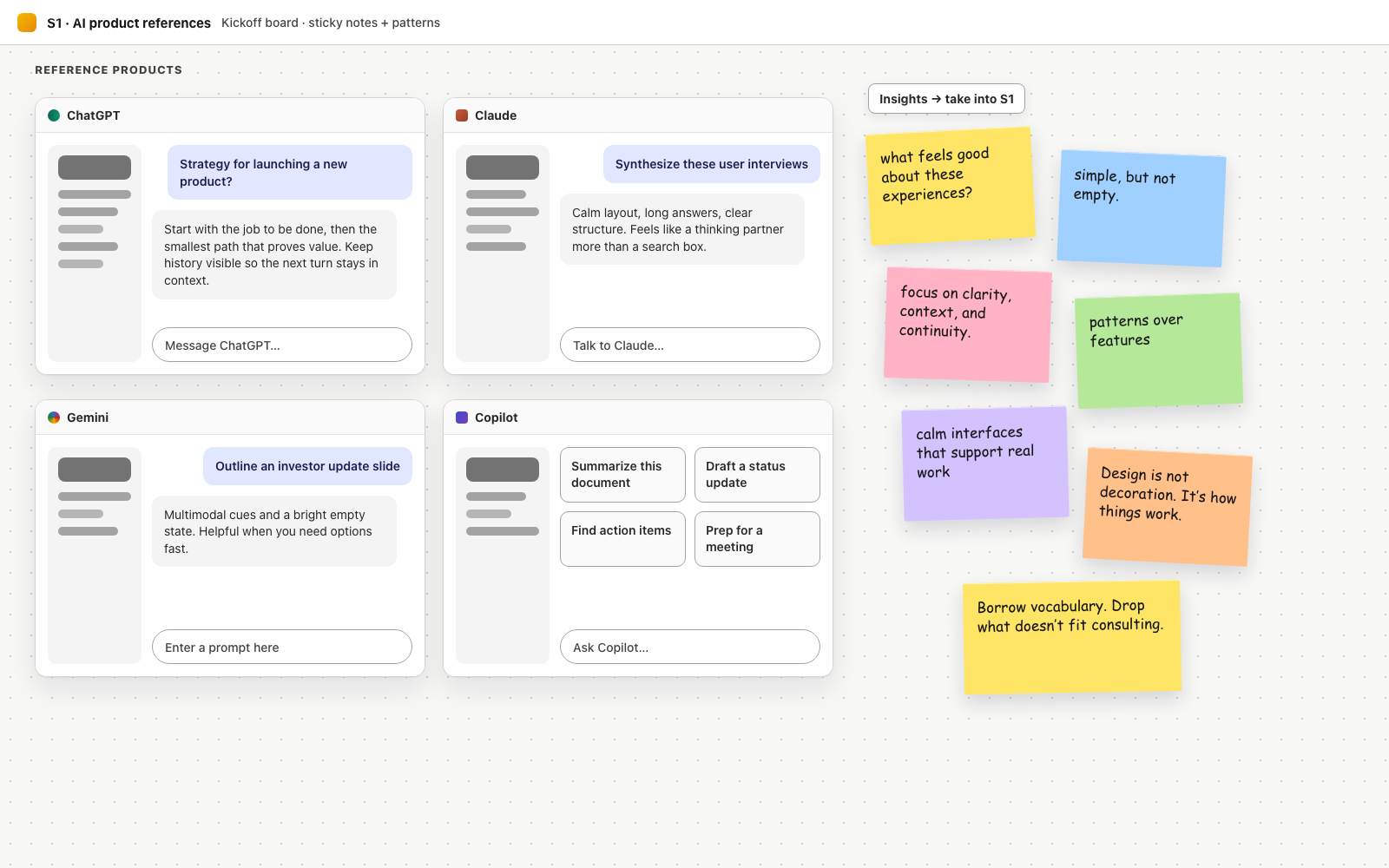
The mood board was not about copying ChatGPT, Claude, Gemini, or Copilot. I wanted to see where people already trusted the prompt, how history showed up, what an empty state felt like when it worked. We borrowed a little vocabulary and threw most of it out when it did not fit consulting.
Wireframes came next. Structure before polish. Project before prompt. Room for suggested actions. Paths into chats, settings, and later the project model for orgs, members, and artifacts.
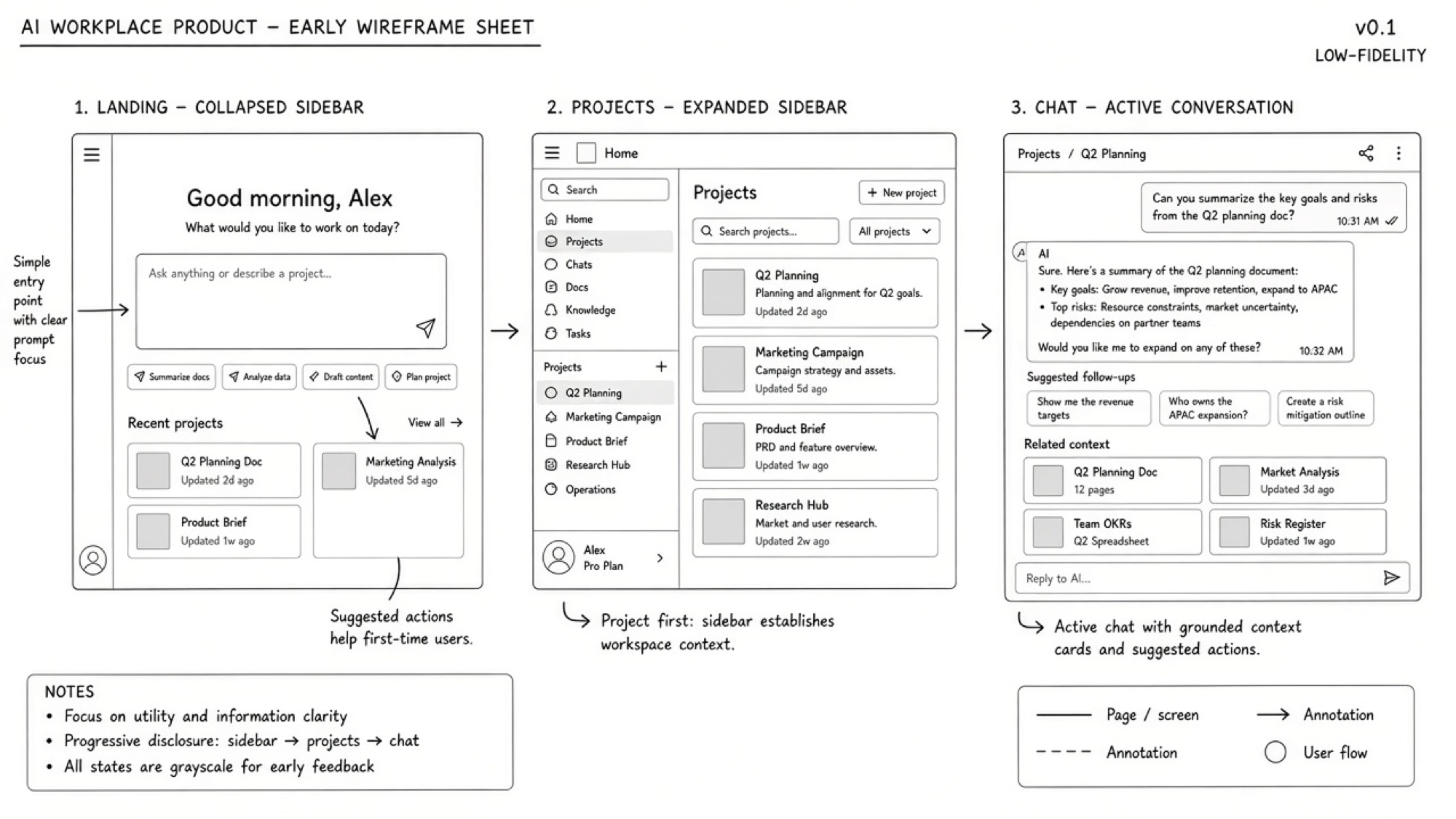
On those frames we locked the architecture, then moved into layout. There was no research panel waiting for us. The ground was empty. Trial and error was the method. We were the users, so feedback meant arguing with the screen until it stopped getting in the way.
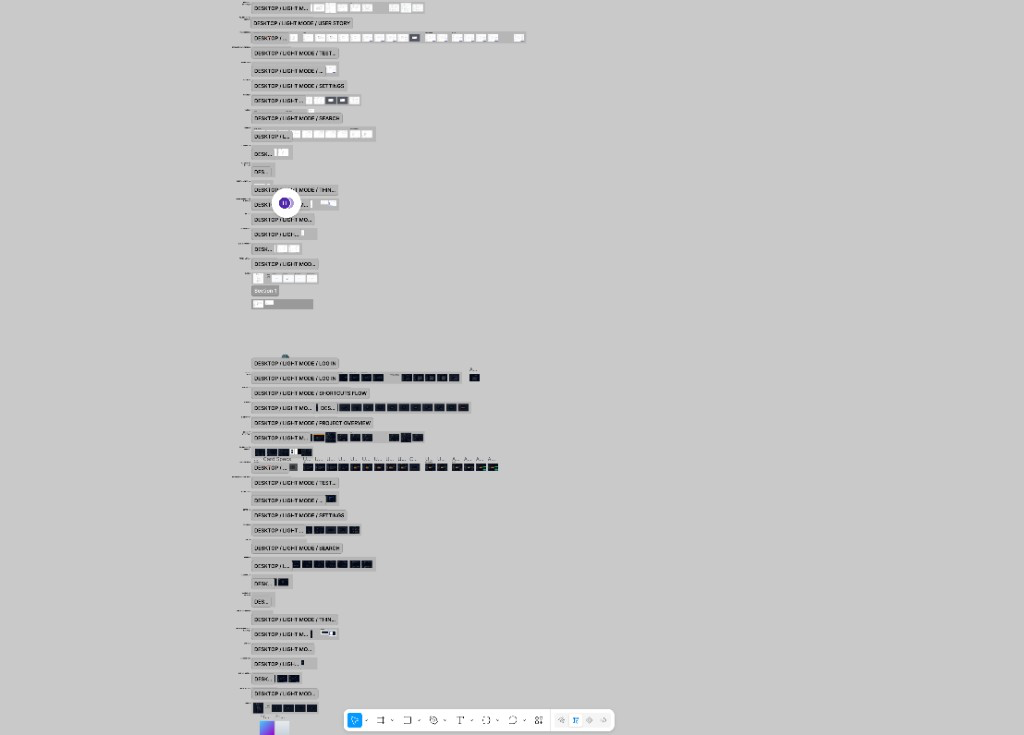
The Figma file that came out of that stretch is enormous. Light and dark. Flows stacked for months. I had never built a UX artifact this complex. Rows of states for stories, settings, search, shortcuts, login. The whole product mirrored twice for theme. It still startles me when I zoom out.
Making it real
High fidelity came after the skeleton held. I designed the product surfaces while the CTO spun up early prototypes we could click. We A/B tested constantly. Not with a fancy experiment stack. Two versions on the table, and whatever still made sense the next working day.
The team grew a few people at a time. A QA joined. A data analyst joined. The work stopped being “can we imagine this” and became “can we ship this and still use it tomorrow.”
Version 1
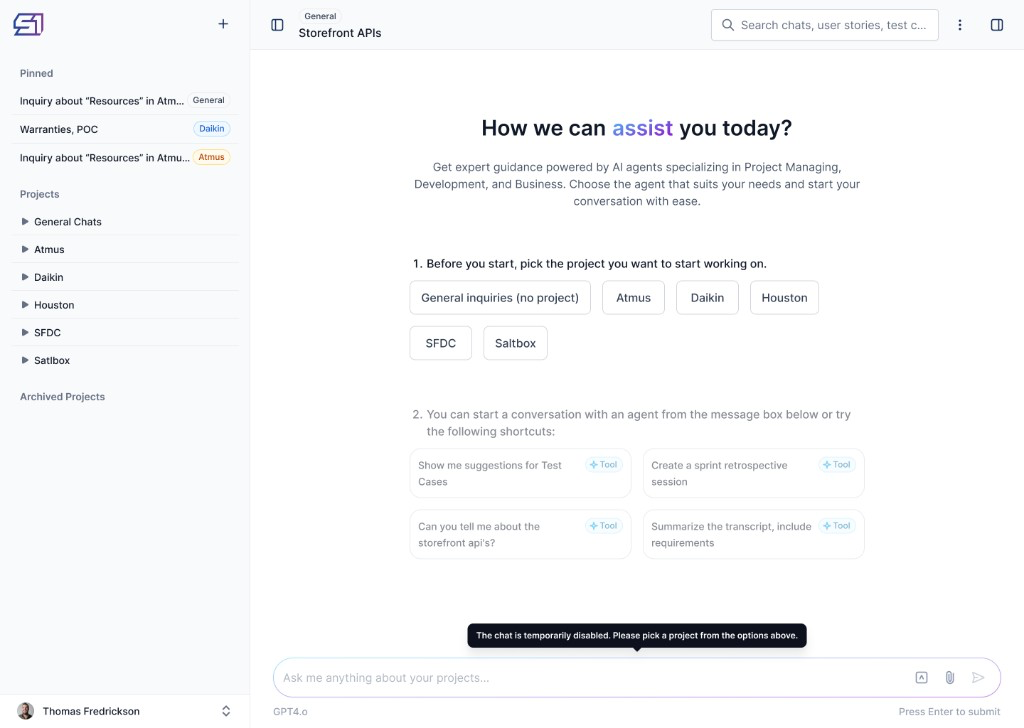
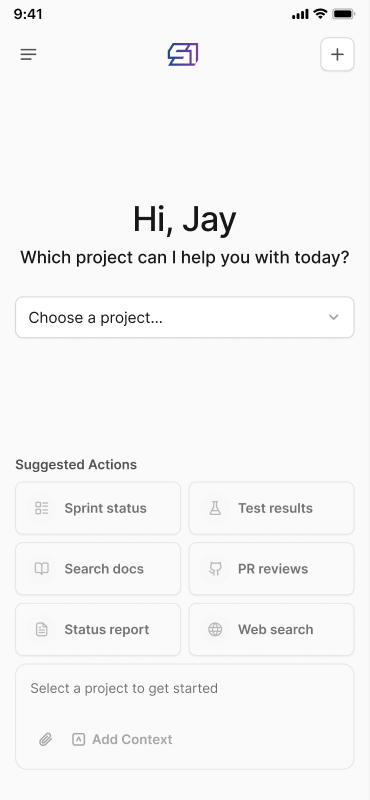
The first version put the agent up front. Pick a project, then lean on shortcuts for test cases, retros, APIs, transcripts. Chat stayed locked until a project was chosen. That was intentional. Context before the prompt.
Version 2
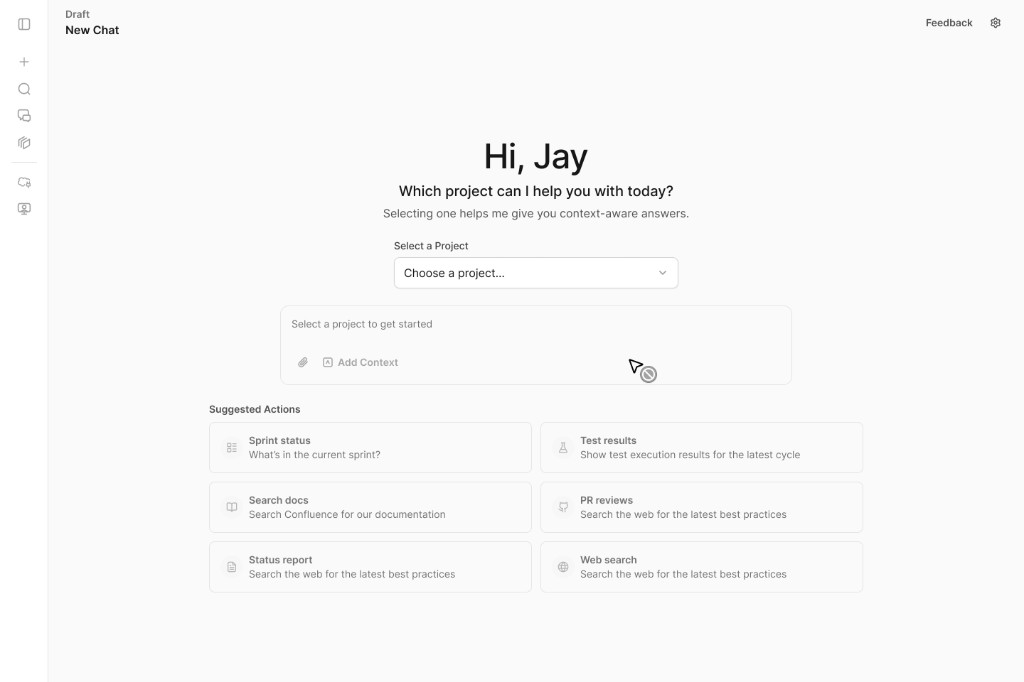
The second pass cleaned up the greeting and the empty state. Project selection got a clearer control. Suggested actions turned into a grid of jobs consultants already recognize: sprint status, test results, Confluence, PRs. Same idea, less noise.
Current (2026)
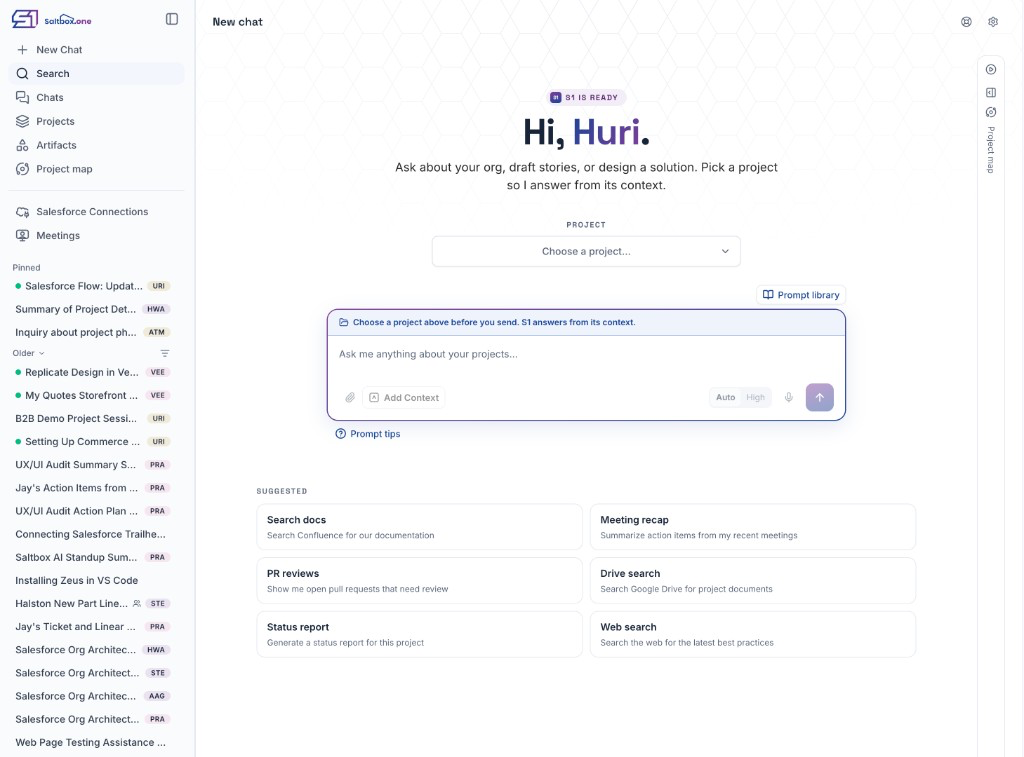
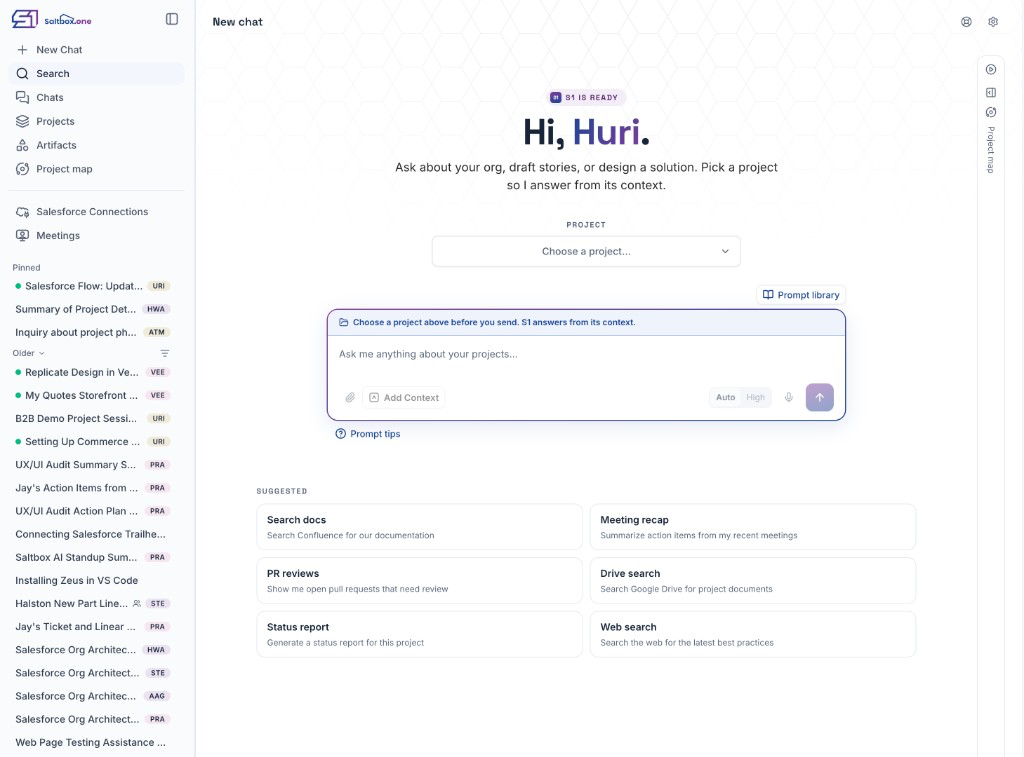
The product lives at app.saltbox.one. Project still comes first. The sidebar holds chats, projects, artifacts, connections, and meetings. The prompt carries context, a library, and a reminder that S1 answers from the project you picked. Suggested actions point at docs, meetings, PRs, Drive, status, and the web.
Alongside the product I built and kept the Saltbox One design system in the same Figma world. Foundations, form elements, navigation, data display, motion, marketing. Token first. Light and dark. Reuse before a one off. That is what let storefront work, internal tools, and S1 share a spine without looking glued together.
What changed for me
I stayed on S1 for close to two years. I was part of the founding group. As AI tools got better and the product matured, my role narrowed on purpose. Less greenfield invention. More UX consistency: new screens still had to feel like the same product, patterns had to hold, and the agent could not outrun the workspace around it.
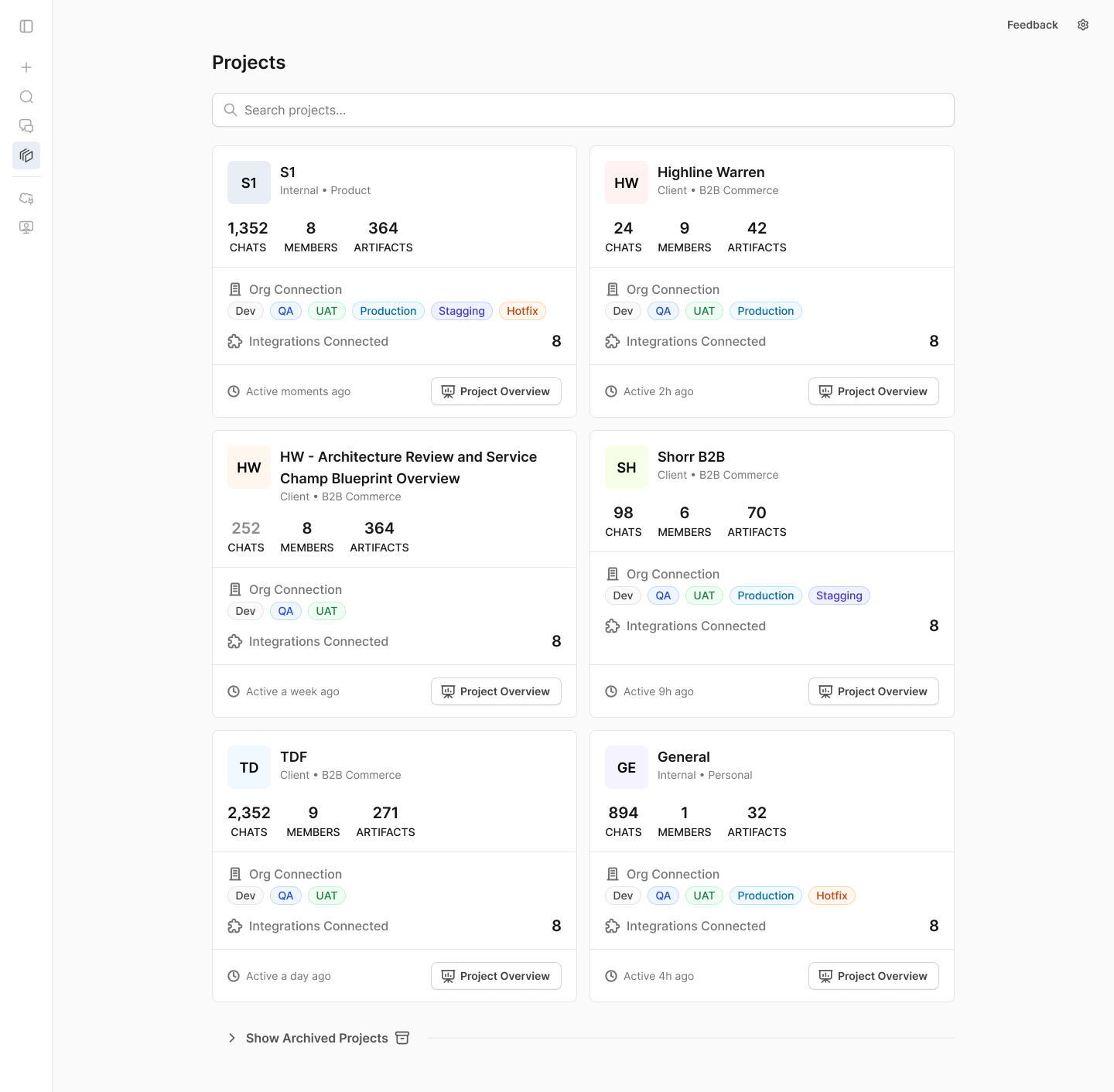
That last part still matters to me. The model is not the product. The product is which project you are in, what the org knows, which artifacts you can trust, and who decides what ships. Designing that layer from a blank page with the CTO, then hardening it with a small team, is the work I want prospects to see.
Live product: app.saltbox.one.